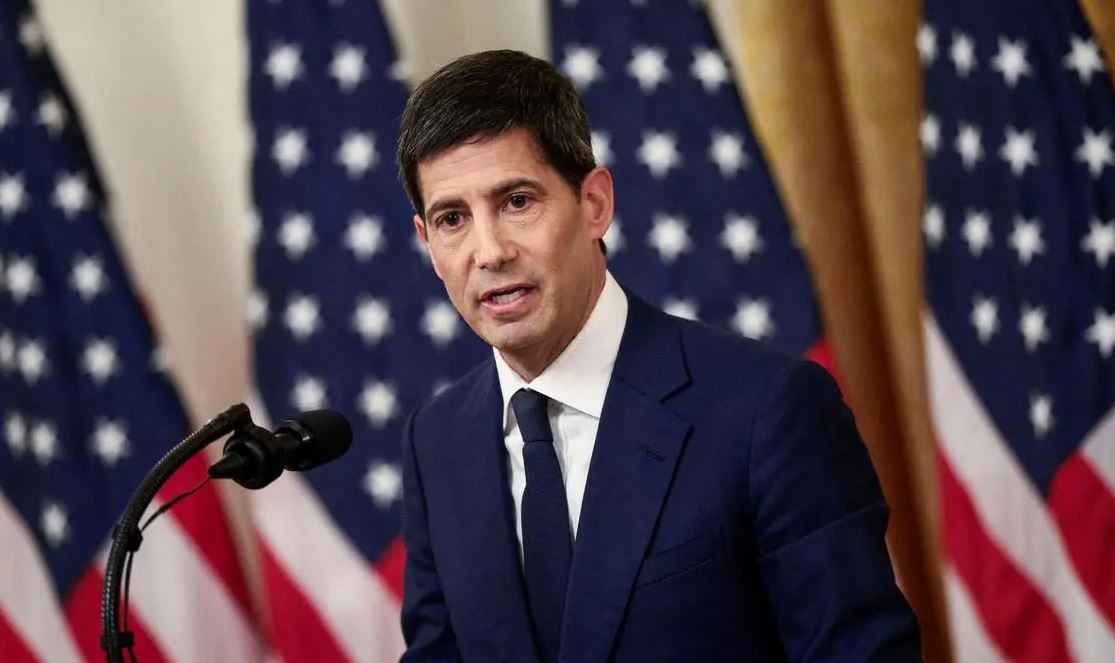
Fed Keeps Rates at 3.50%-3.75% in Warsh's First FOMC Meeting as Inflation Hits Three-Year High
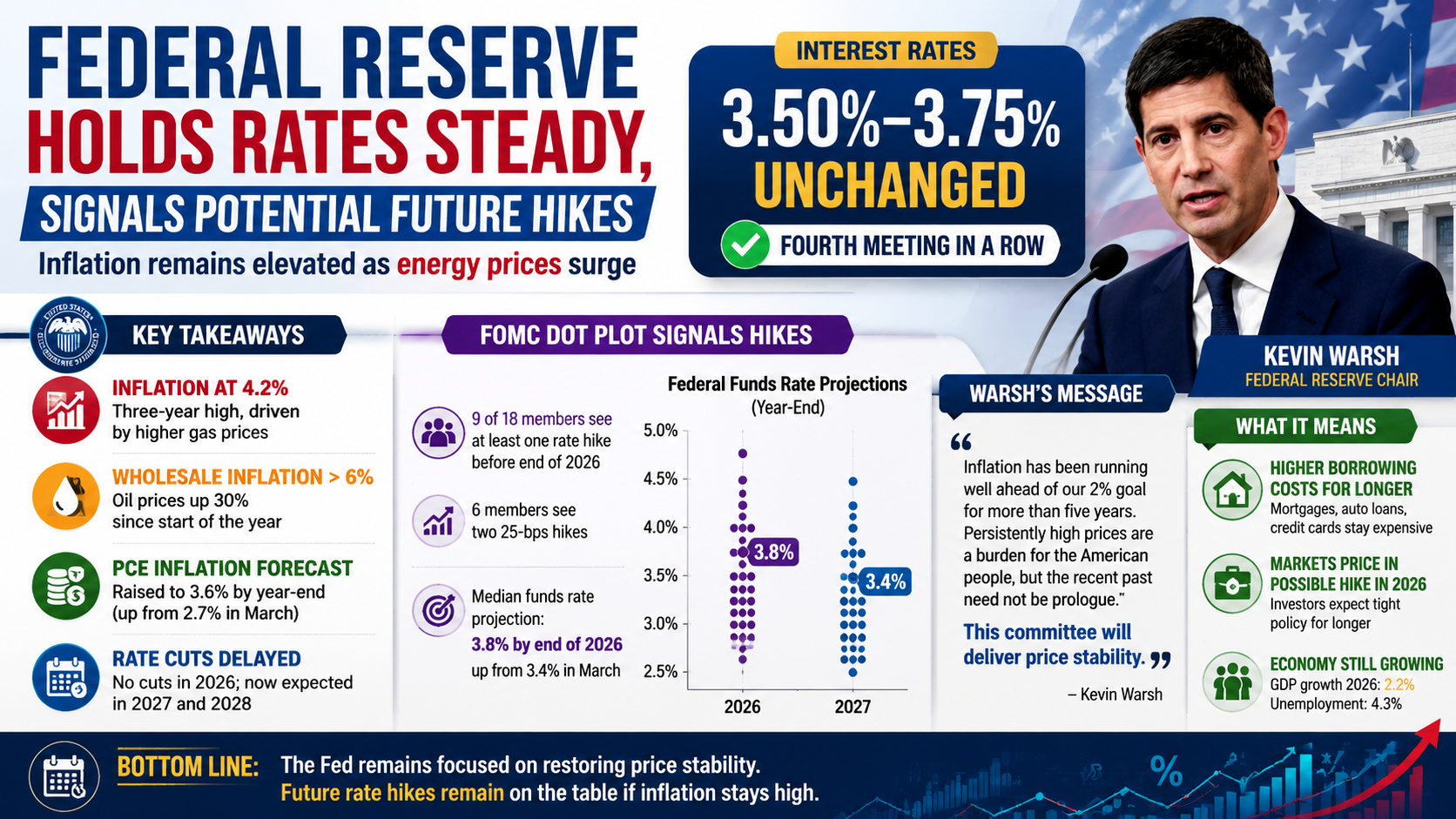
The Federal Reserve held interest rates steady at 3.50%-3.75% on Wednesday in a unanimous vote, marking the fourth consecutive meeting at that level. Under new Chair Kevin Warsh's leadership, the central bank signaled a dramatic shift in policy direction, removing language that had suggested future rate cuts and raising inflation forecasts as solid economic growth continues.
Key takeaways from the June FOMC decision:
- Consumer inflation has accelerated to a three-year high of 4.2%, lifted mostly by costlier gas since the Iran war began.
- Wholesale business inflation surpassed 6% in May, with oil prices remaining higher by 30% since the start of the year.
- The Fed raised its PCE inflation forecast to 3.6% by year's end, up sharply from its March projection of 2.7%.
- Rate cut projections were erased for 2026, with any reductions now pushed into 2027 and 2028.
What the Dot Plot and Warsh's Messaging Tell Markets About the Rate Path
The FOMC's dot plot showed that nine of the 18 voting members project an interest rate hike before the end of 2026, with six projecting two 25-basis-point hikes. The median funds rate projection now sits at 3.8% by year's end, up from 3.4% in March.
In a major departure from his predecessor Jerome Powell, Warsh dramatically shortened the FOMC announcement, removing forward guidance and eliminating detail about which measures the Fed is watching to assess future moves.
What Warsh said directly:
- "We recognize that inflation has been running well ahead of the Fed's long-stated inflation goal of 2%. That's been going on for more than five years. Persistently high prices are a burden for the American people, but the recent past need not be prologue," Warsh said.
- He added: "I am pleased to report that members of the FOMC are unambiguous and unanimous. This committee will deliver price stability".
- Warsh declined to submit his own rate projection, saying: "I did not submit a dot. For me it's not helpful".
What a Possible Rate Hike Means for Consumers, Businesses, and Markets
Markets now price in a reasonable chance of a rate hike later in 2026, a stark contrast to the one to two rate cuts expected earlier this year before energy prices rose. Elevated inflation stemming primarily from higher energy prices has pushed investor expectations toward higher policy rates.
The Fed slightly lowered its GDP growth projection for 2026 to 2.2%, down 0.2 percentage point from March, while cutting the unemployment forecast to 4.3%. These figures point to an economy that is expanding but facing persistent price pressures, leaving policymakers weighing whether supply-shock inflation from the Middle East conflict warrants rate increases or patience.
The recent U.S.-Iran framework agreement to halt the 15-week war and reopen the Strait of Hormuz has eased some fears of a lasting inflation spike, reducing the immediate urgency for Warsh to move on rates. "It takes some pressure off Warsh. It means the worst-case for hikes is more off the table than on it," said Benson Durham, a former Fed official and founder of DASM LLC.