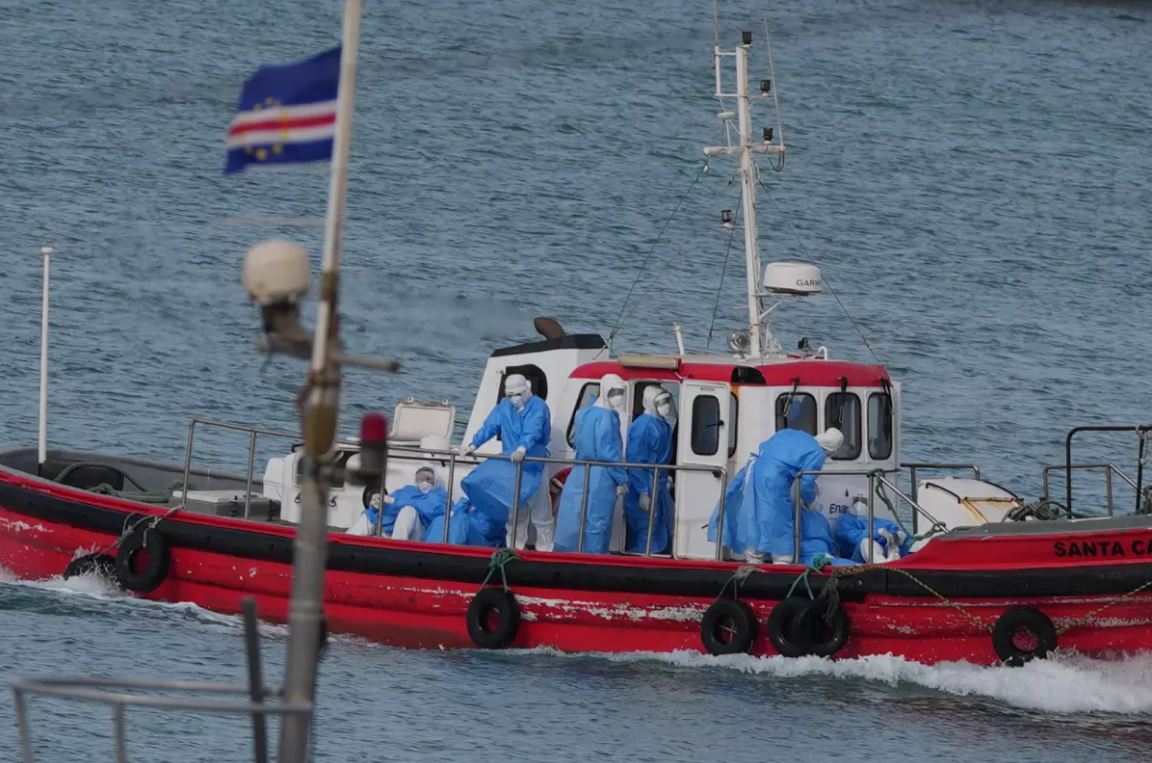
A deadly outbreak of hantavirus aboard a Dutch cruise ship has triggered an international public health emergency involving more than a dozen countries, medical evacuations across four continents, and an urgent global effort to trace passengers who dispersed around the world before the disease was identified.
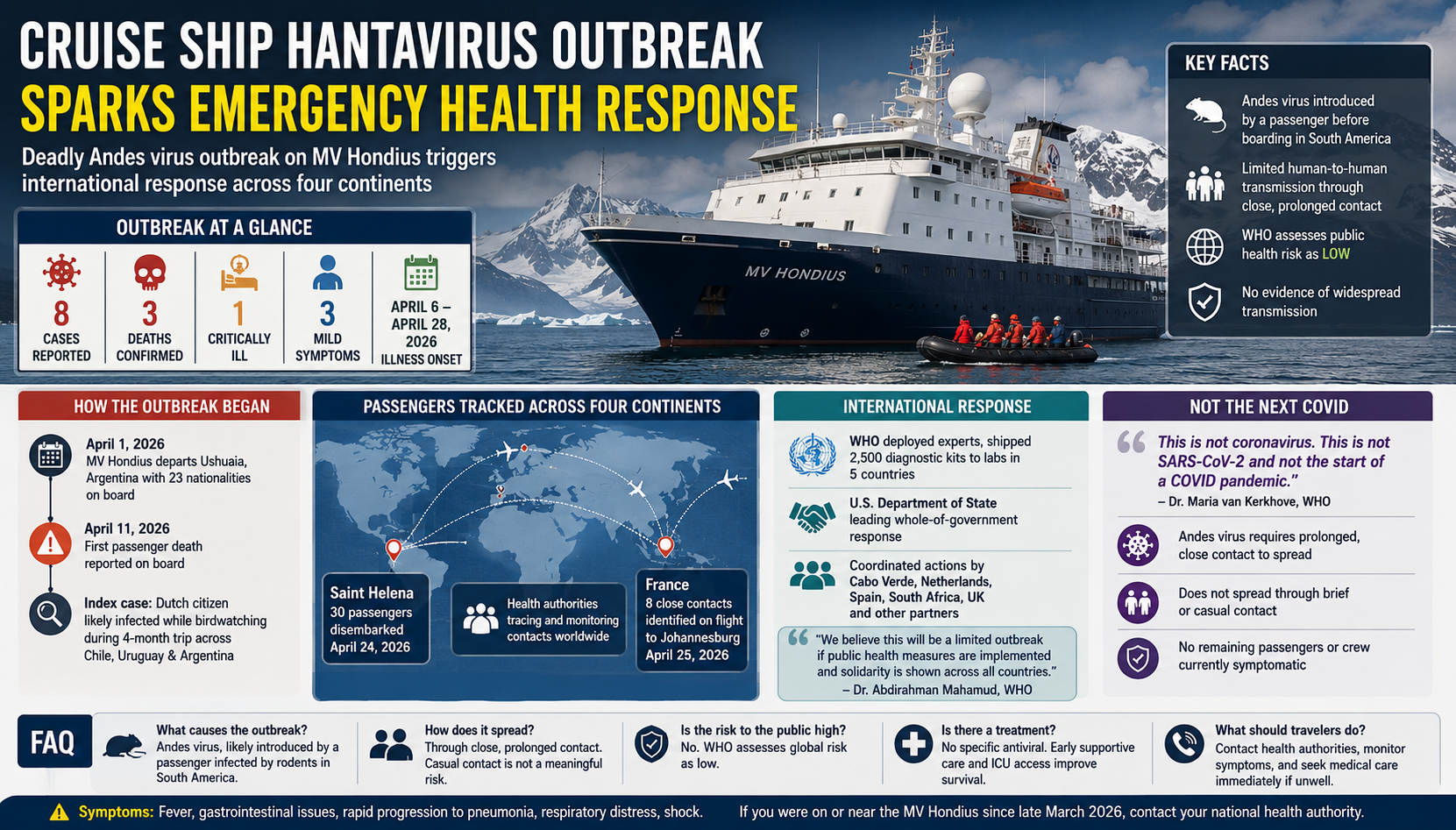
As of May 4, 2026, seven cases, including two laboratory-confirmed cases of hantavirus and five suspected cases, have been identified, with three deaths, one critically ill patient, and three individuals reporting mild symptoms. Illness onset occurred between April 6 and April 28, 2026, and was characterized by fever, gastrointestinal symptoms, rapid progression to pneumonia, acute respiratory distress syndrome, and shock.
WHO Director-General Dr. Tedros Adhanom Ghebreyesus said, "While this is a serious incident, WHO assesses the public health risk as low."
How the Outbreak Began
On April 1, 2026, the MV Hondius left Ushuaia, Argentina, the southernmost city in the world, with passengers and crew of 23 nationalities on board. On April 11, a passenger died on board from the virus.
As of May 5, WHO officials said hantavirus was likely introduced to the ship by a passenger who had contracted the virus before boarding. Argentine investigators identified the leading hypothesis that the index case, a Dutch citizen who presented the first symptoms, contracted the virus while birdwatching.
The Argentine health ministry published a report showing the movements of the index case prior to the ship's departure, documenting a four-month road trip spanning Chile, Uruguay, and Argentina from November 27, 2025, to April 1, 2026.
The Andes Strain: Why This Outbreak Is Different
Not all hantavirus strains behave the same way, and the strain confirmed in this outbreak is the one that concerns infectious disease specialists most.
The hantavirus involved is the Andes virus, the only species known to be capable of limited transmission between humans, linked to close and prolonged contact.
Although uncommon, limited human-to-human transmission has been reported in previous outbreaks of Andes virus. Human hantavirus infection is primarily acquired through contact with the urine, feces, or saliva of infected rodents.
This distinction matters. The Andes virus does not spread through brief or casual contact. It requires sustained, close proximity to a symptomatic individual, which is precisely why household members and caregivers represent the highest-risk secondary contacts.
The International Response
WHO has taken a number of actions since it was notified of the situation on May 2, 2026. These include deploying an expert on board the ship to support a comprehensive medical assessment of all passengers and crew while gathering critical information to evaluate their risk of infection. WHO arranged for the shipment of 2,500 diagnostic kits from Argentina to laboratories in five countries to strengthen testing capacity.
The US Department of State is leading a coordinated, whole-of-government response including direct contact with passengers, diplomatic coordination, and engagement with domestic and international health authorities.
"We believe this will be a limited outbreak if the public health measures are implemented and solidarity is shown across all countries," said Dr. Abdirahman Mahamud, the WHO's alert and response director.
Authorities from Cabo Verde, the Netherlands, Spain, South Africa, and the United Kingdom initiated coordinated response measures, including ongoing engagement between WHO and the National IHR Focal Points of all involved states, to ensure timely information sharing and coordination.
Passengers Tracked Across Four Continents
The most complex dimension of this outbreak is what happened before anyone knew the ship was carrying a deadly pathogen.
Health authorities across four continents were tracking down and monitoring passengers who disembarked the hantavirus-stricken cruise ship before its deadly outbreak was detected, and trying to trace others who may have come into contact with them since then.
Oceanwide Expeditions revealed that 30 passengers disembarked from the ship on April 24, on the remote island of Saint Helena, nearly two weeks after the first passenger died.
France identified eight French nationals who were not on the cruise as close contacts of a confirmed case, having traveled on the same international flight between Saint Helena and Johannesburg on April 25, 2026, with one individual displaying mild symptoms, and diagnostic tests were carried out.
Is This the Next COVID? Experts Say No
The international spread and shipboard setting have prompted widespread comparisons to early 2020. Experts are pushing back firmly on that analogy.
"This is not coronavirus," said Maria van Kerkhove, director of epidemic and pandemic preparedness at WHO. "I want to be unequivocal here. This is not SARS-CoV-2 and not the start of a COVID pandemic."
The transmission biology is fundamentally different. COVID-19 spread through respiratory aerosols with brief, incidental contact. The Andes virus requires prolonged, close exposure to a symptomatic person and has never previously been recorded on a cruise ship.
None of the remaining passengers or crew on the ship were currently symptomatic, Oceanwide Expeditions confirmed.