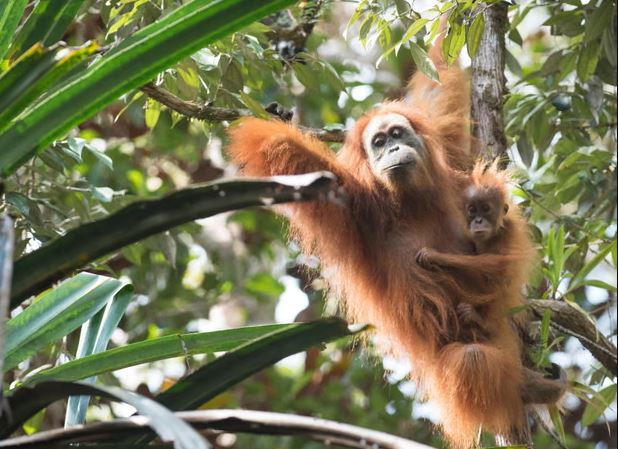
A peer-reviewed study published June 10, 2026 in Current Biology confirms what conservationists feared: a single weather event last November pushed the Tapanuli orangutan, of which there are fewer than 800 left in the wild, even closer to extinction. The findings have triggered urgent calls to permanently protect Sumatra's Batang Toru forest before the planet loses its first great ape species in the modern era.
What the Science Says: Cyclone Senyar's Deadly Reach
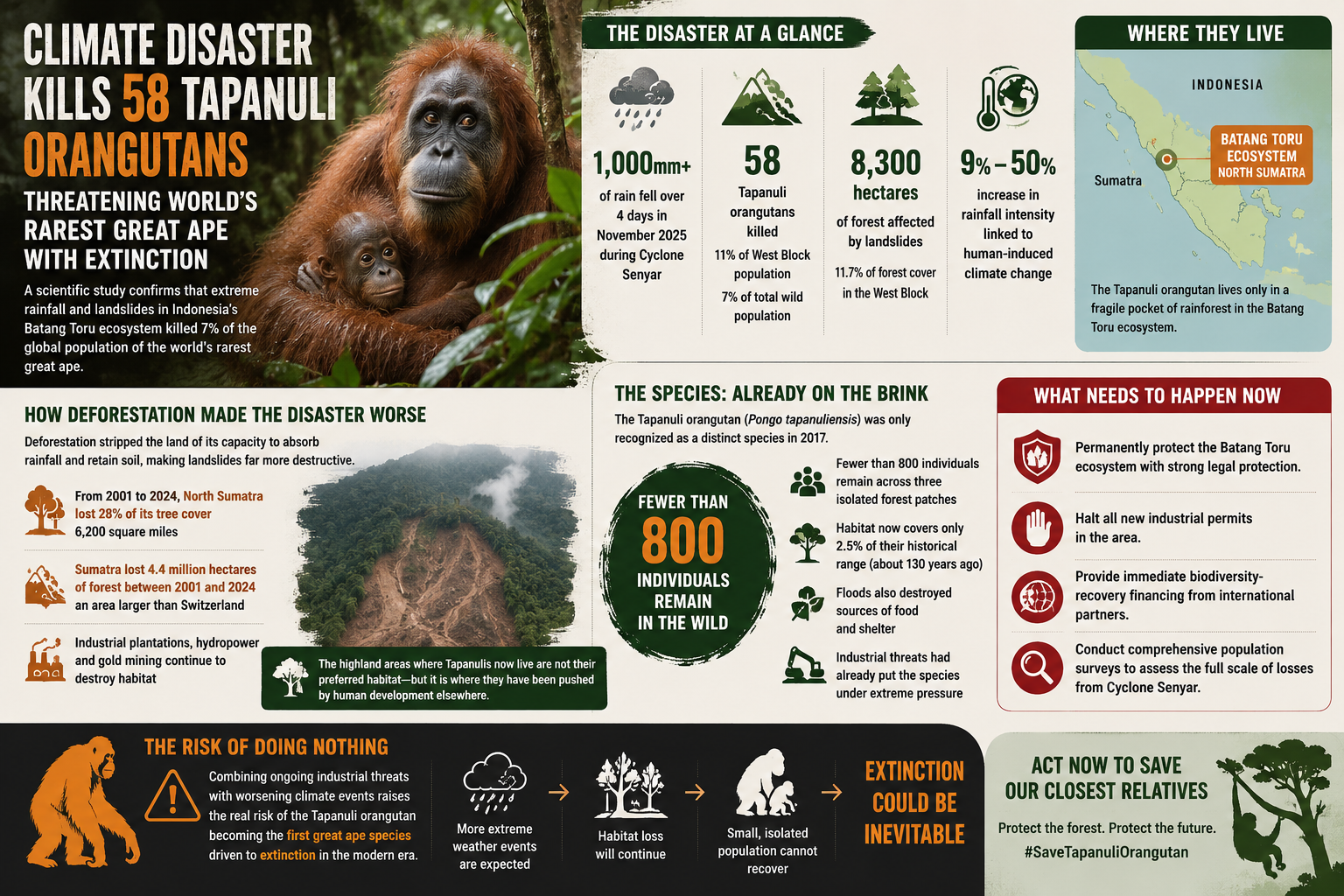
Extreme rainfall and landslides fueled by the climate crisis killed 7% of the remaining population of the world's rarest great ape. The research suggests 58 out of the remaining 800 critically endangered Tapanuli orangutans were killed after more than 1,000mm of rain fell over four days in Indonesia's North Sumatra province in November 2025.
Key findings from the study:
- An estimated 58 Tapanuli orangutans died as a result of the landslides, about 11% of the total living in the West Block region, or 7% of the estimated overall population remaining in the wild.
- Approximately 8,300 hectares of forest, accounting for about 11.7% of the forest cover in the West Block of the Batang Toru region, were affected by landslides triggered by extreme rainfall.
- Attribution analysis shows that human-induced climate change increased the rainfall intensity by between 9% and 50%.
Prof. Serge Wich, a primatologist at Liverpool John Moores University and co-author of the study, said: "In landscapes where populations are small and fragmented, this type of weather or climate event can have population-level consequences. It is extremely worrying for the future of this ape."
How Deforestation Made the Disaster Worse
Climate change did not act alone. Scientists, activists, and government officials say the devastation was likely made worse by widespread deforestation, which stripped the land of its capacity to absorb rainfall and retain soil. From 2001 to 2024, North Sumatra province lost 28% of its tree cover, some 6,200 square miles in all.
Sumatra lost 4.4 million hectares of forest, an area larger than Switzerland, between 2001 and 2024, making hilly landscapes more vulnerable to landslides. The Tapanuli orangutan's last refuge now sits at the intersection of industrial extraction and accelerating extreme weather.
The highland homes inhabited by Tapanulis are not their preferred habitat, but it is where remaining orangutans have been pushed by human development elsewhere.
The Species: Already on the Brink Before the Storm
The Tapanuli orangutan (Pongo tapanuliensis) was only recognized as a distinct species in 2017 and exists in the wild in a fragile pocket of rainforest in North Sumatra. With fewer than 800 individuals remaining, the species was already perilously close to extinction before the disaster.
What makes this loss statistically catastrophic:
- Fewer than 800 individuals remain across three isolated forest patches
- The remaining habitat is estimated to cover only 2.5% of the range in which they lived about 130 years ago
- The floods also wiped out sources of Tapanuli food and shelter
- Industrial plantations, hydropower, and gold mining in the region had already contributed significantly to environmental pressure
Researcher Jatna Supriatna of the University of Indonesia said: "To prevent the first extinction of a great ape species in the modern era, Indonesia must permanently protect the Batang Toru ecosystem. But our international partners must also meet their global commitments by providing immediate biodiversity-recovery financing."