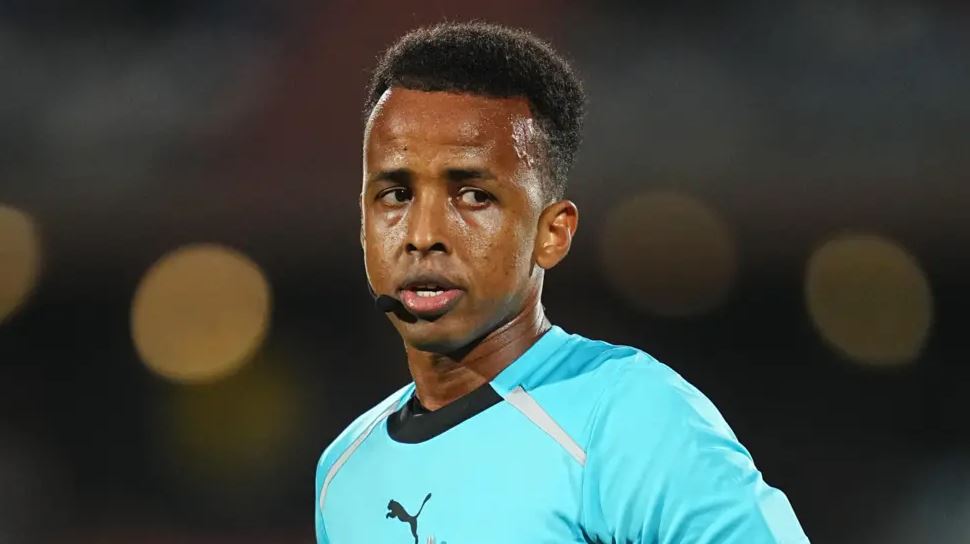
Somali referee Omar Artan returned home to a hero's welcome in Mogadishu on Wednesday after being denied entry to the United States, a decision that led FIFA to remove him from its roster of officials for the 2026 FIFA World Cup and ended his opportunity to become the first Somali referee ever to officiate at football's biggest tournament.
Supporters, government officials, and members of Somalia's football community gathered in Mogadishu to welcome Artan back, hailing him as a national symbol of achievement despite the setback that cut short his historic World Cup assignment.
The story is straightforward in its facts and deeply uncomfortable in its implications. A man built a career that earned FIFA's trust and Africa's highest refereeing honour. A border process undid it in hours.
What Happened at Miami International Airport
US Customs and Border Protection confirmed that Artan arrived at Miami International Airport from Istanbul on Saturday, underwent additional inspection, and was subsequently determined to be inadmissible due to vetting concerns before being denied entry.
In an interview with the New York Times, Artan described an 11-hour interview process during which he presented documentation from FIFA and evidence of his career, before being moved to a holding cell, detained, and then placed back on a flight to Istanbul. He received no explanation for the refusal.
Key facts from the entry denial:
- Artan had a valid visa prior to travel, which his arrival in the US suggests was in place.
- CBP said admissibility decisions are made case by case using law enforcement, national security, and immigration information available at the time of inspection.
- A US official speaking anonymously later suggested the decision was linked to an alleged association with suspected members of terror organisations, though no formal charge or evidence was made public.
- Somalia is on President Trump's travel ban list of 39 countries, although exemptions exist for World Cup athletes and staff.
FIFA confirmed: "Mr. Artan will be unable to train and officiate at the FIFA World Cup 2026 after he was denied entry into the United States. FIFA is not involved in host country immigration processes, including visa adjudications."
Who Omar Artan Is and Why This Appointment Mattered
This was not an administrative appointment. It was a milestone years in the making.
Artan, born in Mogadishu in 1992, became a FIFA-listed referee in 2018 and made history in January 2024 as the first Somali to officiate at the Africa Cup of Nations, taking charge of the Group E match between Tunisia and Namibia.
He was named the Confederation of African Football Referee of the Year in 2025 and became the first person from Somalia to take charge of a continental final when he refereed the 2024-25 CAF Champions League final.
In an earlier interview with Al Jazeera from Mogadishu, Artan had described the World Cup selection as an honour achieved despite serious hardship. He noted that he sometimes had to change his route to his local stadium because of explosions in the city.
His public response on returning home was measured: "Despite the circumstances, I am in a positive mood and I am focused on the next challenges in my refereeing career," Artan said in a statement.
A Pattern Larger Than One Referee
The Artan case sits within a broader series of visa disputes surrounding the 2026 World Cup. Iran boycotted the World Cup draw in Washington after the US denied visas to several top federation officials, including federation President Mehdi Taj, who serves as a vice president of the Asian Football Confederation and sits on FIFA committees.
The Council on American-Islamic Relations decried the travel bans following Artan's denial, stating that the country should not ban anyone from its shores simply because of their nationality.
For any government hosting a global tournament, the visa question is not a domestic administrative matter. It becomes foreign policy in public view. FIFA's position is consistent: host governments determine admissibility, and the organisation does not challenge those decisions. That stance protects FIFA's relationship with host nations but leaves individual officials without institutional recourse.