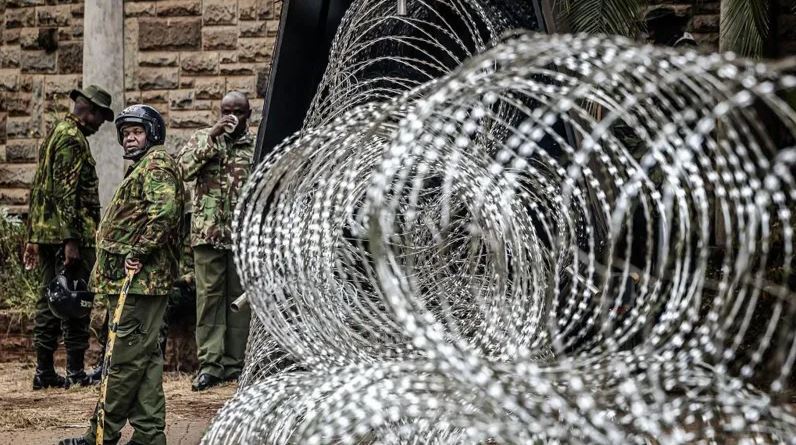
Nairobi woke up to barbed wire, roadblocks, and deserted streets on Thursday as Kenya marked the second anniversary of the Gen Z protests that shook President William Ruto's government in 2024.
What began as youth-led resistance to a finance bill has evolved into an annual reckoning with police violence, economic hardship, and unresolved political grievances. This year's commemoration carries fresh tension, with a new finance bill once again at the center of public anger.
Why Kenya Is Marking This Anniversary
The Gen Z movement first emerged in 2024, when young protesters mobilized against a tax bill, rising living costs, unemployment, and government corruption, with many demanding Ruto's removal from office. While that did not happen, the pressure forced the government to withdraw the tax bill.
Thousands gathered this week to commemorate more than 120 people killed across the 2024 and 2025 protest movements. Last year's first anniversary commemoration turned deadly, with government forces cracking down on protesters and killing more than 60 people.
What Sparked the Renewed Anger
A revised finance bill proposing new levies on bread, mobile money transfers, and internet data has reignited the same frustrations that drove the original 2024 protests. Protesters argue the changes simply repackage old burdens under new names.
Youth unemployment remains a central driver, with young people making up roughly 68 percent of Kenya's unemployed and overall joblessness near 12 percent.
How Nairobi Locked Down Ahead of the Protests
Security agencies took extensive measures across the capital well before the anniversary date.
- Police cordoned off roads leading to Nairobi's central business district and erected barbed-wire barricades near Parliament.
- Roadblocks were mounted at Allsops, Githurai, Kangemi Bridge, Valley Road, and the Nyayo Stadium roundabout.
- Heavy police deployment and barricades paralyzed transport and restricted movement across the city.
- Police declared planned demonstrations illegal, citing a lack of formal notification from organizers.
Police and Government Response
National Police Service spokesperson Michael Muchiri Nyaga said no formal notice seeking permission for demonstrations had been received as of Wednesday, adding that officers would enforce the law against unlawful gatherings.
Interior Minister Kipchumba Murkomen said police had received notification from families of those killed in the 2024 and 2025 protests, who provided a planned route but did not specify start or end times. Murkomen also warned that unnamed politicians had financed efforts to infiltrate the demonstrations and target businesses.
Government spokesperson Isaac Mwaura ruled out a public holiday, urging Kenyans to continue normal activities and warning that repeated disruptions had caused billions of shillings in economic losses.
The Political Stakes Behind the Protests
Opposition politicians and activists have jostled to associate themselves with the protest movement, with eyes on the 2027 general election. Analysts suggest that if young Kenyans register and vote in large numbers, the Gen Z bloc could become a decisive force across presidential, gubernatorial, and parliamentary races.
President Ruto has adopted a more conciliatory tone, apologizing to young Kenyans and launching a youth jobs initiative called Climate Worx. Whether that gesture eases tensions remains uncertain, with the Saba Saba anniversary on July 7 looming as the next test of the movement's momentum.
A Tale of Two Cities
While Nairobi faced major restrictions, Kisumu remained calm, with businesses open and public transport operating normally despite increased police patrols.