After more than a decade of legal paralysis, Libya's largest oil refinery is preparing to come back online. For a country that has long exported crude while importing refined fuel, the Ras Lanuf restart is not just an infrastructure story. It is an economic sovereignty moment with real consequences for energy markets, public finances, and North Africa's downstream oil sector.
The Deal That Ended a 13-Year Dispute
Libya's state National Oil Corporation (NOC) announced it had regained full control of the Ras Lanuf Refinery from the Emirati LERCO JV partner Trasta Company. After more than a decade of international legal and arbitration disputes, NOC Chairman Masoud Suleiman officially signed a final agreement between the NOC and Trasta Company. This agreement terminates the partnership and entails the withdrawal of the foreign partner from LERCO, with the partner's shares reverting to the National Oil Corporation.
The partnership between the National Oil Corporation and Trasta dates back to an agreement signed in 2009. The refinery had been completely out of service since 2013 due to legal and administrative disputes, not for technical or security reasons.
- NOC Chairman Masoud Suleman called the deal one of the most important developments in Libya's oil sector since the 2011 uprising, saying it closes one of the industry's most complicated disputes.
- Prime Minister Abdulhamid Dbeibah described it as the closure of a "complex file" and called it a "national achievement" that returns a major strategic asset to the state.
What Ras Lanuf Is and Why It Matters
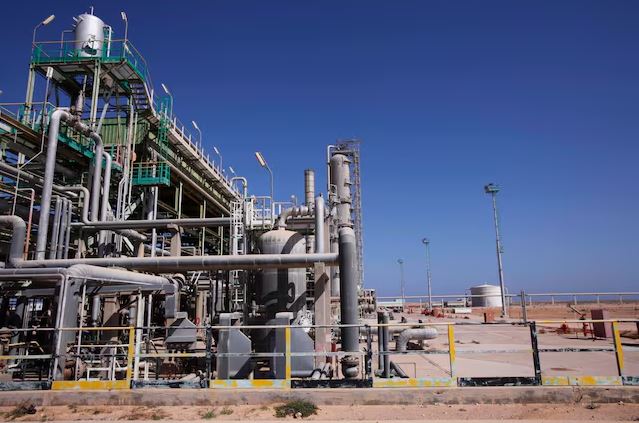
The Ras Lanuf complex is one of the largest oil and industrial complexes in Libya and North Africa, with an estimated refining capacity of about 220,000 barrels of oil per day, representing more than two-thirds of Libya's total refining capacity.
Located about 600 kilometers east of Tripoli on Libya's northeastern coast, the Ras Lanuf complex includes a refinery, storage facilities, export terminals, and petrochemical units.
- In addition to the refinery, which entered service in 1984, the complex includes petrochemical units including an ethylene unit with a capacity of 1.2 million tons per year, polyethylene production units, storage facilities, export terminals, and a berth at Ras Lanuf port.
- As domestic refining capacity declined, Libya became increasingly dependent on imported fuel and petroleum products, placing additional pressure on public finances and foreign currency reserves.
Restart Timeline and Cost
Libya aims to restart its 220,000-barrel-per-day Ras Lanuf oil refinery within six to 12 months to supply the domestic market, NOC Chairman Masoud Suleman told reporters in London. The budget was allocated, and NOC has the manpower and equipment needed for maintenance, which he expects will cost about $60 million.
Production and Crude Supply Details
- NOC expects initial run rates of about 200,000 barrels per day, gradually ramping up to full capacity. The refinery will run on Libya's Amna crude grade.
- Output from Ras Lanuf would mainly serve the domestic market and be marketed by NOC subsidiary Brega Oil Company.
- Libyan technical teams have recently succeeded in restarting the petrochemical units, with the second polyethylene production line brought back online after more than 12 years of stoppage.
Libya's Broader Refinery Expansion Strategy
This restart is not an isolated move. It fits inside a much larger industrial plan.
Authorities want to increase national refining capacity from about 380,000 barrels per day to 660,000 barrels per day, an increase of nearly 75%. A plan announced in January 2026 includes the rehabilitation of existing refineries such as Ras Lanuf as well as the construction of new facilities, particularly in southern Libya.
Industry experts believe Ras Lanuf could once again become a cornerstone of Libya's refining and petrochemical sectors if redevelopment efforts are supported by sustained investment and long-term planning. A fully operational refinery would help reduce the country's costly fuel import bill.
Economic and Sovereign Implications
The move goes beyond a routine administrative or legal transition. It reflects a wider shift in how Libya may choose to manage its oil wealth in the future, with increasing emphasis on industrial development, economic sovereignty, and creating greater value from domestic resources.
Globally, energy-producing nations are no longer judged solely by the volume of crude oil they produce. Increasingly, economic strength is measured by the ability to control the full energy value chain, from extraction to advanced industrial processing and manufacturing.
- NOC officials expressed hope that the agreement would help stabilize production, restore confidence in Libya's energy sector, and attract new investment to areas affected by years of conflict and political fragmentation.
- Officials hope the move will help stabilize production and attract new investment to the conflict-hit region.