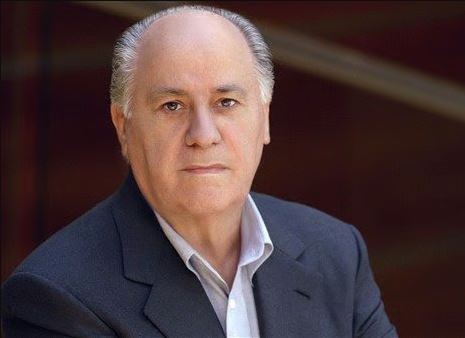
Amancio Ortega rarely gives interviews. He has never chased headlines, never courted the press, and still eats lunch in the staff canteen at Inditex headquarters in Arteixo, Spain. Yet the man behind Zara built one of the largest fortunes in modern business history, and his story offers real lessons for anyone tracking retail trends, wealth creation, or corporate strategy.
This piece breaks down how a teenager with no formal education became a global fashion tycoon, what his net worth looks like over time, and why his low key approach still works in 2026.
Who Is Amancio Ortega
Amancio Ortega Gaona was born on March 28, 1936, in Busdongo de Arbas, a small village in northern Spain. His father worked on the railways. His mother was a housemaid. Money was tight, and that shaped everything that came next.
Early Life and Education
Ortega left school at 14 after his family relocated to A Coruña for his father's job. He never returned to formal education and has no university degree. Instead, his classroom was the shop floor.
- At 13 or 14, he took a job as a delivery boy for a local shirtmaker called Gala.
- He learned pattern cutting, tailoring, and garment production by hand.
- He later worked as a draper's and tailor's assistant, absorbing how the clothing supply chain actually worked.
This hands on training became the foundation for an idea that would later upend the entire fashion retail model: cutting the time between design and store shelf.
From Bathrobes to a Global Empire
In 1963, Ortega founded Confecciones Goa, a small operation producing quilted bathrobes and housecoats. It was modest work, but it taught him production and distribution at scale.
In 1975, he opened the first Zara store in A Coruña with his then wife, Rosalía Mera. The idea was simple but radical for its time: watch what customers want, design it fast, manufacture it close to home, and get it into stores within weeks rather than months.
The Business Model That Changed Retail
Zara's parent company, Inditex, grew around a few core principles that still define fast fashion today:
- Short production cycles instead of seasonal collections planned a year in advance.
- Vertical integration, controlling design, manufacturing, logistics, and retail under one roof.
- Small batch production, which limits overstock and creates urgency in stores.
- Heavy reliance on customer feedback from stores to guide what gets made next.
Inditex went public in 2001, and Ortega became Spain's richest man overnight. He stepped down as CEO in 2005 and as executive chairman in 2011, but he kept his hands on the product and design side of the business for years afterward.
Amancio Ortega's Net Worth Over Time
Ortega's wealth has moved with Inditex's stock price and, more recently, with his sprawling real estate holdings. Here is how his fortune has tracked across the decades, based on Forbes and Bloomberg Billionaires Index data.
Year | Estimated Net Worth | Milestone |
2001 | Multi billion dollar range | Inditex IPO makes him Spain's richest man |
2015 | Around $80 billion | Briefly the world's richest person, ahead of Bill Gates |
2020 | Around $58.5 billion | Fortune drops sharply during the pandemic as stores close |
2024 | Around $103 billion to $134 billion | Recovery driven by Inditex earnings and real estate gains |
March 2026 | Around $148 billion | Ranked roughly 10th richest person in the world per Forbes |
Note that figures vary slightly between Forbes, Bloomberg, and other trackers depending on when they were pulled and how private real estate assets are valued. What is consistent is the trajectory: a dramatic pandemic dip followed by a strong multi year climb.
Where the Money Comes From
- Roughly 59 percent ownership of Inditex through his holding company Pontegadea.
- A real estate portfolio that includes stakes in London's The Shard, Madrid's Torre Picasso, and several Fifth Avenue buildings in New York.
- Dividend income from Inditex, which has paid out billions of euros since the 2001 IPO.
Why His Strategy Still Matters in 2026
Retail analysts keep coming back to Ortega's model because it solved a problem most fashion companies still struggle with: matching supply to real demand without long lead times. Inditex's most recent results show record profit levels, and online sales now make up a substantial share of total revenue as the company invests in faster delivery across Europe and beyond.
His approach also holds a lesson for founders outside fashion. Ortega diversified into real estate early, using retail cash flow to build a second, more stable income stream. That decision cushioned his fortune during downturns, including the pandemic period when store closures hit Inditex hard.
Philanthropy and Public Life
Despite his wealth, Ortega keeps an unusually low profile for someone in the top ten globally. He has given only a handful of interviews in his lifetime. His philanthropic arm, the Amancio Ortega Foundation, has directed billions of euros toward education, healthcare, and scientific research since 2001, including major donations toward cancer treatment programs and public healthcare systems in Spain.