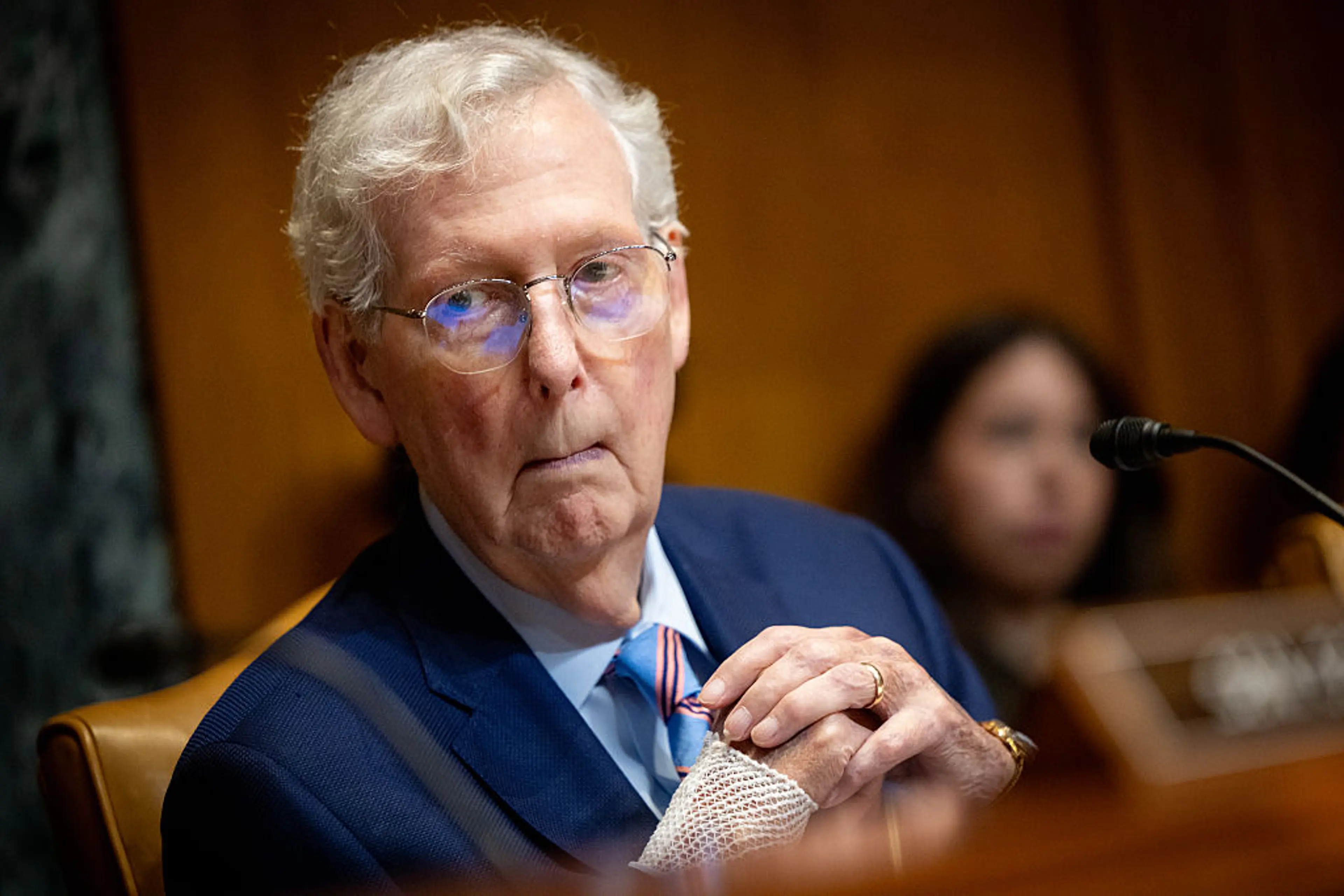
An extended absence from Capitol Hill creates institutional friction, particularly when it involves senior leaders holding key committee positions. The prolonged public disappearance of Kentucky Senator Mitch McConnell has sparked intense debate in Washington. Following a fall in mid-June that resulted in hospitalization, brief unconsciousness, and a subsequent bout of pneumonia, McConnell has remained out of view for more than 80 days.
As the chamber prepares to reconvene, staff signals and statements from lawmakers point to a planned return on September 14. That timeline has raised broader questions about Senate protocol, member accountability, and whether the deference senior figures receive during long absences amounts to a form of institutional favoritism, a question with real precedent in this senator's own record.
Inside the Prolonged Absence: Health Recovery vs. Institutional Transparency
The absence began on June 14, 2026, when McConnell was hospitalized in Louisville, Kentucky, following a fall at his residence. Initial communications from his office provided sparse detail, a pattern consistent with previous health episodes involving the senator.
Weeks later, fuller disclosures confirmed the fall had left him briefly unconscious and that his recovery had been complicated by a hospital-acquired case of pneumonia. This Mitch McConnell health update 2026 timeline has since become the clearest public account of the senator's condition.
Timeline of key events through the summer:
- June 14, 2026: Hospitalized in Louisville following a fall, briefly loses consciousness.
- Mid-July 2026: McConnell breaks his public silence, confirming the fall, ruling out a heart attack, stroke, concussion, or broken bones.
- Late July to early August 2026: Continues recovery at a rehabilitation center, where he is treated for a mild case of pneumonia.
- Early August 2026: Discharged to home to continue intensive physical therapy targeting mobility, tied in part to lingering effects of his childhood polio.
- September 3, 2026: Representative James Comer signals a staff goal of a September 14 Senate return, though McConnell's own office has issued no formal scheduling announcement.
- Despite confirmation that McConnell is alive, communicating with staff, and actively recovering, the absence of public video appearances or direct statements from the senator himself has kept speculation about what happened to Mitch McConnell alive well into September.
Analyzing the September 14 Senate Return and Favoritism Allegations
Questions surrounding where is Mitch McConnell escalated when Comer publicly shared that McConnell's staff is aiming for his return when the Senate reconvenes on September 14. Critics argue that the latitude extended to senior senators during long-term health crises reflects a structural double standard in how Congress handles absence.
Proxy Operations and Staff Continuity
While junior members facing prolonged absences often face immediate pressure over committee obligations, party leadership has historically shown more patience with senior figures. Staff continue managing legislative coordination and constituent casework, keeping an office functionally active without the member's direct presence, a dynamic that has drawn criticism but is not unique to McConnell.
Committee Mechanics and Leadership Shielding
McConnell remains a senior member of the Senate Appropriations Committee and chairs its Defense Subcommittee, positions that carry direct influence over federal spending decisions. Holding this kind of influence while largely unseen in public creates real procedural friction, and his absence has already had a measurable legislative cost. Earlier this year, a farm package failed to advance out of committee specifically because his vote, along with that of another absent senator, was unavailable.
Precedents in Senate History
The Senate has a long documented history of accommodating extended absences for senior members of both parties. In high-stakes legislative sessions, however, non-attendance directly affects voting margins and committee quorums, which is precisely what fuels allegations of favoritism whenever a senior figure's absence stretches this long without full transparency. It is also the core of why hasn't Mitch McConnell been seen in public for over 80 days, a gap his office attributes entirely to medical recovery rather than any deliberate strategy.
Elaine Chao and Questions of Conflict of Interest
Any accountability review of McConnell's career would be incomplete without examining the scrutiny that has surrounded his wife, Elaine Chao, who served as US Transportation Secretary from 2017 to 2021. These matters are years old and separate from his current recovery, but they remain the strongest documented example of conflict-of-interest questions tied to the senator's political influence, and they should be understood as alleged conflicts of interest, not proven corruption.
The Transportation Department Ethics Investigation
The Department of Transportation's Office of Inspector General conducted a formal investigation into whether Chao misused her position, following a request from House Democrats concerned about possible conflicts of interest.
Deputy Inspector General Mitch Behm's report found examples of staff being directed to assist with matters connected to her father, including work related to his personal biography, describing this as a misuse of government resources for personal purposes.
The Justice Department ultimately declined to pursue a criminal case, stating there might be ethical or administrative issues but insufficient basis for criminal charges. The inspector general's office closed its investigation as a result.
Importantly, this investigation did not establish that McConnell himself committed any crime, and Chao has denied wrongdoing.
The Kentucky Federal Funding Controversy
Reporting from Politico and others raised questions about whether Chao's department gave outsized attention to Kentucky, noting that roughly a quarter of her meetings with local officials in one period involved individuals from the state her husband represents.
A particularly scrutinized example involved a competitive federal infrastructure grant worth more than $67 million awarded to a Kentucky project during Chao's tenure.
The inspector general's office ultimately stated it could not corroborate allegations that federal funds had been improperly steered to Kentucky, a finding that cuts against the strongest version of the favoritism claim.
This makes the funding controversy a legitimate open question about the appearance of favoritism, not a proven case of steered corruption.
The Family Shipping Business Controversy
Chao's family owns Foremost Group, an international shipping company. Congressional investigators and watchdog groups examined whether her cabinet position could have benefited the family's business interests, including its dealings connected to China.
The scrutiny generated sustained public attention over potential conflicts between her official role and her family's commercial interests, though no criminal findings resulted from this specific line of inquiry.
As with the funding questions, there is no established evidence that McConnell personally profited from these business relationships, and that distinction matters for an accurate accounting of the record.
McConnell's Federal Spending Influence in Kentucky
Separate from the Chao-era questions, McConnell's own decades-long role in directing federal money to Kentucky offers a more current and better-documented look at his political influence.
McConnell's office announced in early 2026 that he secured nearly $2.6 billion in federal funding for Kentucky priorities through the fiscal year 2026 appropriations process, a single-year record for the state.
Earlier in the year, he separately announced $541 million secured through a specific set of appropriations bills covering law enforcement, environmental, and science-related priorities.
McConnell has said his total career figure for Kentucky, across more than four decades in the Senate, exceeds $65 billion.
Earmarks and directed appropriations of this kind are entirely legal and represent standard congressional practice, not evidence of corruption on their own. They do, however, illustrate how much influence a senior appropriator can exert over where federal money lands, a legitimate subject for public accountability reporting regardless of legality.
Conclusion
The extended absence of Mitch McConnell highlights the intersection of personal health, institutional power, and public accountability in the US Senate. Staff signals point toward a September 14 return to Capitol Hill, but reliance on written statements rather than public appearances has left key questions only partly answered. The available evidence does not support a claim that his return timeline was shaped by political favoritism. It does, however, sit alongside a separate and well-documented history, the Elaine Chao-era conflict-of-interest questions and McConnell's own outsized role in directing federal spending to Kentucky, that together illustrate how institutional deference toward senior lawmakers can blur the line between standard accommodation and a genuine accountability gap.