Who Is Jeffrey Epstein and Why Do These Files Matter
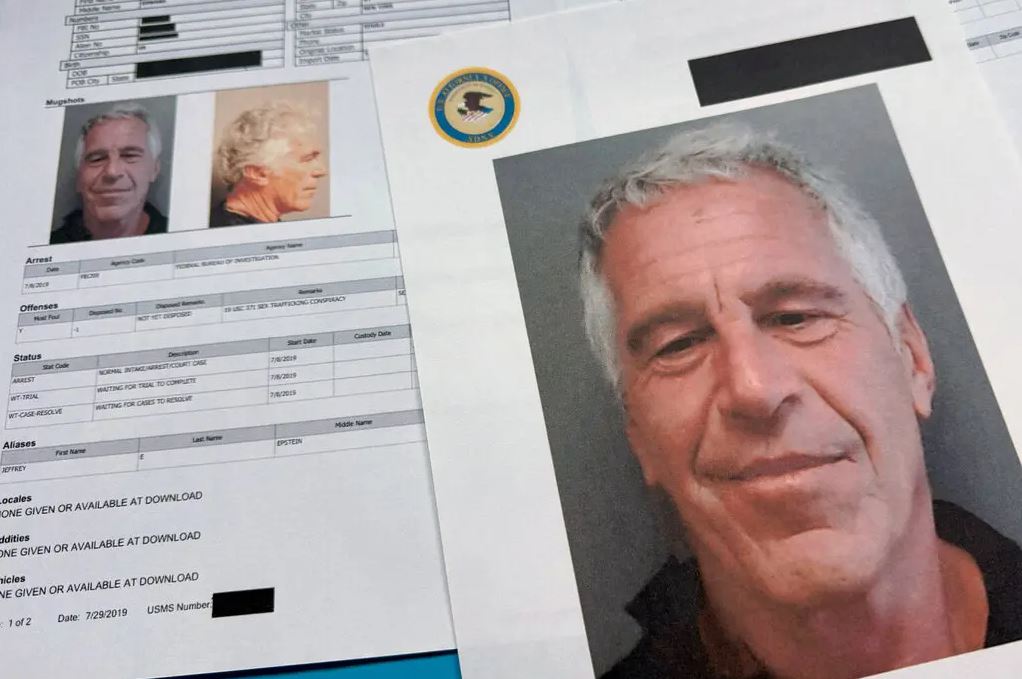
Jeffrey Epstein was an American financier and convicted child sex offender who operated one of the most extensively documented sex trafficking networks in modern American history. He died in Manhattan jail cell on August 10, 2019, in what was officially ruled a suicide, while awaiting federal sex trafficking charges.
His death did not end the investigation. It accelerated the public's demand to know the full truth.
The documents now collectively known as the Epstein Files represent a partially released collection of millions of records, images, videos, and emails that detail Epstein's activities, his social circle of public figures, politicians, and celebrities, and the federal investigations that surrounded him for decades.
For survivors, journalists, and lawmakers, these files represent something far more consequential than scandal. They represent documented institutional failure at the highest levels of American law enforcement.
Who Released the Epstein Files and When
Understanding the Epstein file releases requires a clear timeline. These documents did not emerge from a single event. They came through a series of court orders, congressional actions, journalistic investigations, and federal disclosures spanning more than two years.
The January 2024 Court Unsealing
Court documents from the Ghislaine Maxwell defamation case were unsealed in January 2024, though they contained little information not already publicly known. Most individuals were mentioned in passing and were not accused of any wrongdoing.
The documents stem from a 2015 civil lawsuit filed by Virginia Giuffre, who alleged Epstein had flown her around the world for sexual encounters with billionaires, politicians, royals, and heads of state.
The Epstein Files Transparency Act of 2025
The Epstein Files Transparency Act is a law passed by the 119th United States Congress and signed by President Donald Trump on November 19, 2025. It requires the U.S. Attorney General to make publicly available in a searchable and downloadable format all files pertaining to the prosecution of Epstein, and to provide the Judiciary Committees in both the House and Senate with an unredacted list of all government officials and politically exposed persons named in the files.
The House of Representatives voted 427 to 1 to pass the act on November 18, 2025. The Senate passed it via unanimous consent the following day.
The January 2026 Mass Release
The Department of Justice published over 3 million additional pages responsive to the Epstein Files Transparency Act on January 30, 2026. More than 2,000 videos and 180,000 images were included. Combined with prior releases, this made the total production nearly 3.5 million pages.
These files were collected from five primary sources: the Florida and New York cases against Epstein, the New York case against Maxwell, the New York cases investigating Epstein's death, the Florida case involving a former butler of Epstein, multiple FBI investigations, and the Office of Inspector General investigation into his death.
What the Epstein Documents Actually Reveal
The FBI Knew About Epstein in 1996
This is one of the most significant revelations in the entire file release and one that demands accountability.
An FBI document released on December 19, 2025 confirmed a 1996 criminal complaint against Epstein related to child pornography. That complaint, stamped September 3, 1996, underscores that Epstein had been on the radar of law enforcement years before federal and state charges were finally brought against him in New York and Florida.
In September 1996, Epstein survivor Maria Farmer complained to the FBI that the late financier was involved in child sex abuse. Officials failed to take steps to investigate.
Speaking on CNN, an emotional Annie Farmer, Maria's sister, said: "Just to see it in writing and to know that they had this document this entire time, and how many people were harmed after that date? We've been saying it over and over, but to see it in black and white has been very emotional."
Who Appears in the Files
Donald Trump appears in the released files thousands of times. Many of the references are described as innocuous. The Miami Herald reported that in July 2006, as the initial investigation into Epstein was underway, Trump called then-Palm Beach Police Chief Michael Reiter and said he was glad police were acting, and that he had called Maxwell "evil." The Herald based its report on an FBI interview with the police chief.
New photos show musicians Mick Jagger, Michael Jackson, and Diana Ross in photographs with Epstein, and at times with other people whose faces have been blacked out. In one image, Jagger is seen sitting between Epstein and former President Bill Clinton.
Lawrence Summers, former U.S. Treasury Secretary, stepped down from teaching at Harvard University and from the board of OpenAI after new emails dating from 2017 to 2019 were released. In one, Summers asked Epstein for dating advice about a woman he described as a mentee.
Peter Mandelson, former British Ambassador to the United States, appears multiple times in the files, including calling Epstein "my best pal." Documents indicate Mandelson may have leaked internal government information to Epstein. He resigned from the Labour Party and the House of Lords in February 2026, and was later arrested on suspicion of passing documents to Epstein.
The DOJ's Own Conclusion on a "Client List"
The Justice Department and FBI concluded in a July 2025 memo that there was no evidence that Epstein blackmailed powerful figures, maintained a formal "client list," or was murdered. Investigators said they reviewed footage of Epstein's prison cell on the night he died and found no one entered the area.
Who Criticized the Release and Why
The release of the Epstein Files was not praised. It was challenged from both political parties.
The first batch of declassified records drew bipartisan criticism for extensive redactions and failure to meet the law's requirements. Many documents contained extensive redactions, with hundreds of pages entirely blacked out.
Among the thousands of documents published, at least 550 pages were entirely blacked out, including a 119-page document labelled "Grand Jury-NY" and a set of three consecutive documents totalling 255 pages. Each page was fully redacted.
A group of 18 Epstein survivors issued a statement saying: "Once again, survivors are having their names and identifying information exposed, while the men who abused us remain hidden and protected."
A watchdog group complained to the Department of Justice that the files were missing communications between top Trump officials at the DOJ. Survivors and members of Congress described the redactions as "abnormal and extreme."
The Faulty Redaction Scandal
Faulty redaction techniques in the December 2025 release allowed members of the public to recover blacked-out content. Social media users discovered that blacked-out text in certain documents could be revealed by copying and pasting it into another application. The flaw traced back to a 2021 court filing by the Virgin Islands attorney general's office.
What Happened to Those Named in the Files
The consequences of the Epstein File releases have been significant, stretching from Washington to London to Wall Street.
Lawrence Summers resigned from all academic and faculty roles at Harvard University by the end of the school year as a result of his documented relationship with Epstein. His wife's PBS show was also canceled when it became known that Epstein had helped fund the program.
King Charles III stripped Mountbatten-Windsor of his remaining titles on October 30, 2025, meaning he can no longer be referred to as "prince," and evicted him from his royal residence.
Peter Attia, the prominent longevity physician and media figure, announced he was stepping away from his CBS News contributor role after his name appeared approximately 1,700 times in the January 2026 document release. He had exchanged crude emails with Epstein and arranged medical testing for the financier.
Who Is Still Fighting for Full Disclosure
Representatives Ro Khanna (Democrat, California) and Thomas Massie (Republican, Kentucky), the bipartisan authors of the Epstein Files Transparency Act, have formally requested to review all unredacted files to ensure government compliance with the law.
Rep. Robert Garcia, the highest-ranking Democrat on the House Oversight Committee, called it "outrageous that Trump's DOJ has illegally withheld over 1 million documents from the public," adding that his committee wanted to hear from whistleblowers and anyone at the DOJ who could assist in bringing justice for survivors.
A January 2026 CNN poll found that 49 percent of Americans were dissatisfied with how much of the Epstein files the federal government had released, while two-thirds of respondents said the government was deliberately withholding information.
What the Files Do Not Show
Accuracy demands that this be stated plainly. The documents are vast, but their conclusions are limited.
The Epstein Files illuminate investigative leads, timelines, and limits of proof while also exposing institutional choices, heavy redactions, and competing political pressures that help explain why more criminal charges were not brought. They do not uniformly tie named third parties to criminal conduct in ways prosecutors said they could prove beyond a reasonable doubt.
Many of the tips and summaries in the release are uncorroborated or lack provenance in the public record, which weakens their immediate utility for new charges.
The files confirm the scope of Epstein's network and the extent of institutional failure. They do not, at this time, provide the prosecutable roadmap that many survivors and the public had hoped for.