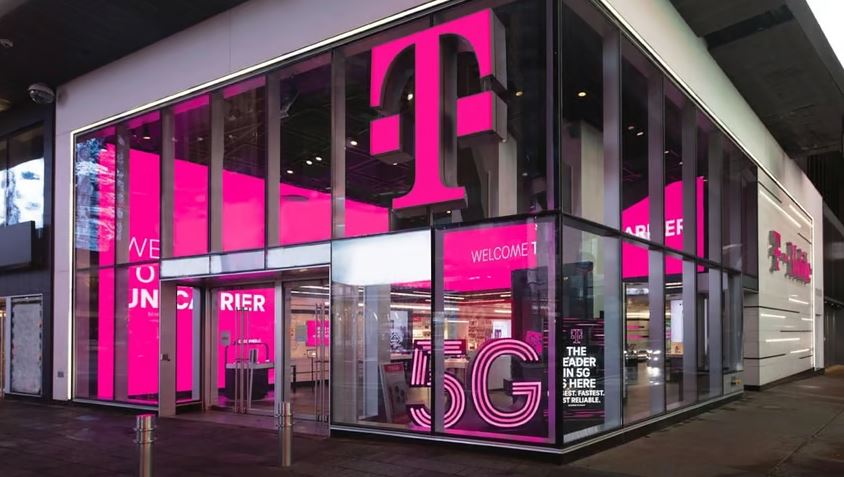
The retail telecom landscape is undergoing a structural realignment as digital channels displace traditional brick-and-mortar operations. In the latest phase of this industry-wide pivot, a new T-Mobile store-closing initiative has been confirmed alongside broader corporate restructuring.
Official state regulatory filings reveal that six retail locations are slated to shut down, contributing directly to t-mobile store closures and layoffs that will impact 77 employees. The move reflects a deliberate shift away from legacy storefront footprints toward digital-first sales tools and consolidated corporate flagship locations.
The Anatomy of the Closures: Impact, Locations, and Headcount
The latest contraction was formalized through a Worker Adjustment and Retraining Notification, known as a WARN notice, filed with the Washington State Employment Security Department on August 21, 2026.
Reduction at a glance:
Shuttered storefronts: 6 retail locations, plus 1 corporate facility in Bothell.
Total WARN headcount: 77 employees, made up of 63 newly notified workers and 14 whose separations were previously announced and deferred.
Affected separation window: September 21, 2026 through November 18, 2026.
Parent company Deutsche Telekom's first-half 2026 US headcount reduction: 4,671 roles, a 6.7 percent decline.
The physical footprint reduction targets specific retail corridors, with store shutdowns confirmed for Seattle, Bothell, Kennewick, Tacoma, Vancouver, and Yakima. Affected roles range from frontline mobile experts and account specialists on the sales floor to senior systems architects and regional management.
Shuttered Retail Locations
Seattle: the 45th Street and Stone Way retail location.
Bothell: the Canyon Pointe area corporate office, closing entirely.
Kennewick: the N Columbia Center Boulevard store.
Tacoma: the Pacific Avenue location, while the city's two other T-Mobile stores remain open.
Vancouver: a store along the Chkalov Drive corridor.
Yakima: a store on W Nob Hill Boulevard.
The separations are scheduled to take effect between September 21 and November 18, 2026. Company representatives have indicated that affected retail staff may apply for open roles at neighboring locations or explore internal transfer options where available.
Strategic Pivot: Why Telecom Retail Is Shrinking
The t-mobile store closing announcements are not isolated operational decisions. They reflect a longer-term corporate strategy aimed at optimizing distribution costs across the business.
Legacy retail model: dense networks of dealer and corporate stores, in-person bill pay and account changes, and a high overhead footprint.
Evolving digital model: fewer, larger flagship locations, self-service tools through the T-Life app, and streamlined digital onboarding for new customers.
During recent capital markets briefings, executives outlined plans to reduce third-party dealer locations while consolidating company-owned stores into larger flagship hubs. Routine transactions such as bill payments, plan adjustments, and basic hardware upgrades have increasingly migrated to digital platforms.
Market Drivers Behind T-Mobile Job Cuts 2026
Several overlapping factors are shaping this year's reductions.
Post-acquisition integration: Following the earlier Sprint merger and a multibillion-dollar acquisition of UScellular's wireless operations, the carrier has worked to eliminate redundant retail locations and overlapping administrative roles.
Workforce Transformation initiative: Deutsche Telekom reported that T-Mobile's US workforce contracted by 4,671 positions, or 6.7 percent, in the first half of 2026 alone, bringing total US headcount down to 65,365.
Margin pressure: Rising capital expenditures tied to network buildouts have pushed carriers to streamline physical overhead and redirect capital toward network capacity and digital infrastructure.
Broader Market Implications for Wireless Retail
The wider trend of T-Mobile store closures and layoffs signals a multi-year shift across the telecommunications sector. Rival carriers have pursued comparable retail optimization strategies, trimming underperforming storefronts in favor of digital sales channels.
Restructuring chronology:
2023: T-Mobile eliminated roughly 5,000 corporate and back-office jobs nationwide.
November 2025: Srini Gopalan became T-Mobile's Chief Executive Officer, succeeding Mike Sievert, who moved into a newly created Vice Chairman role.
February 2026: A WARN notice covered 393 corporate and technology roles in Washington state.
August 2026: The current filing confirms 77 retail and corporate jobs cut as 6 retail stores close.
While retail storefronts remain important for customer acquisition and complex technical support, the traditional model of dense retail presence has become harder to sustain economically. As t-mobile job cuts 2026 continue to roll out under this restructuring plan, frontline retail workers face growing pressure to transition toward specialized sales roles or digital customer support functions.
Conclusion
The latest t-mobile store closing wave and its accompanying t-mobile store closures and layoffs highlight how rapidly shifting consumer behavior is reshaping commercial retail strategy in the wireless sector. While t-mobile job cuts 2026 reflect real operational disruption for frontline staff, they represent a calculated shift by telecom operators toward leaner, digital-first business models designed to protect margins in an increasingly saturated market.
Explore the More story and facts: Read More..