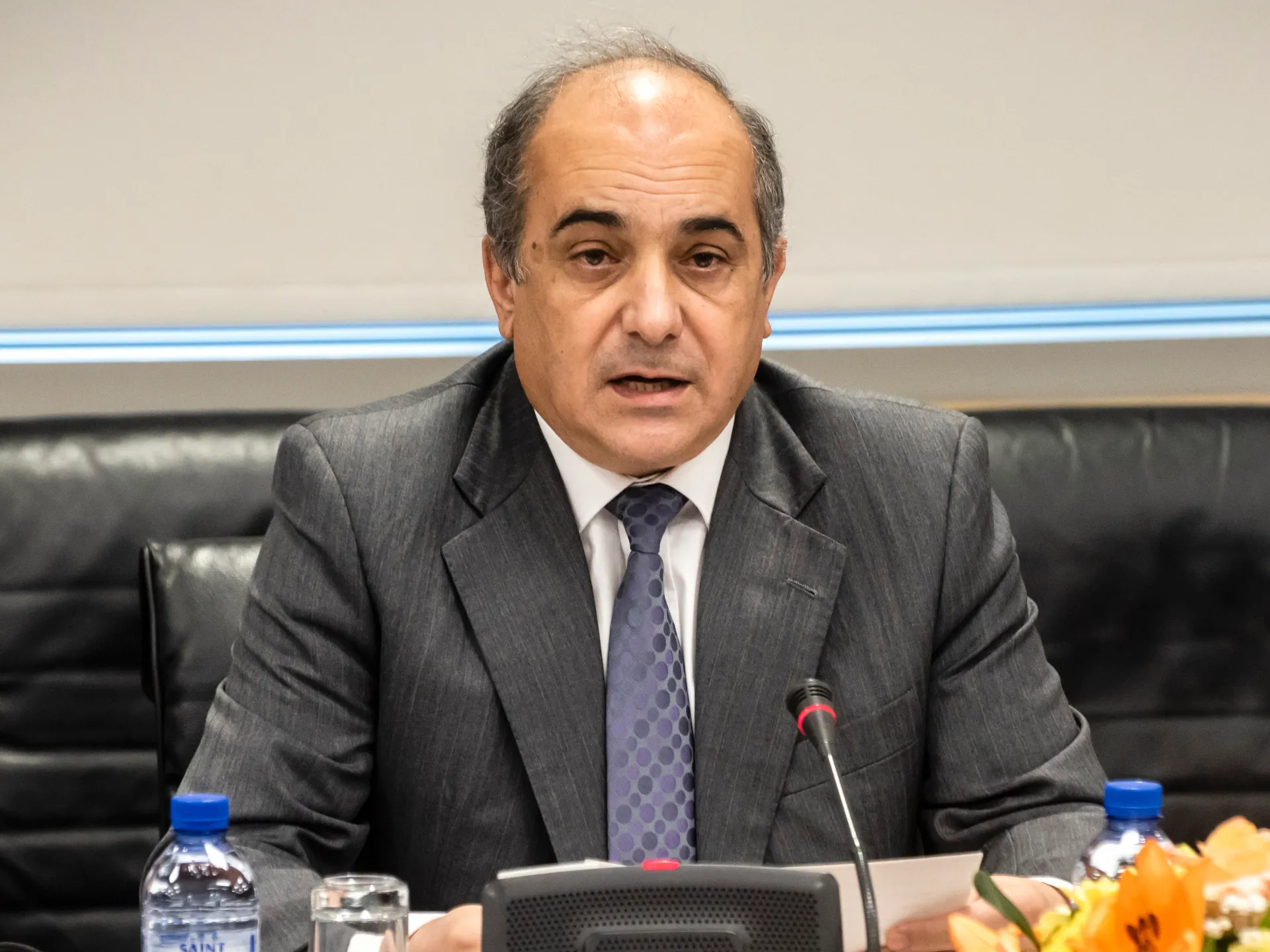
The global financial system relies heavily on trust, but transparency collapses when elite access is auctioned off behind closed doors. Few political exposes in recent European history have demonstrated this dynamic as starkly as the case of Demetris Syllouris and the cyprus golden visa scandal that ended his political career.
At the center of it stood Demetris Syllouris, the former Demetris Syllouris speaker of parliament, whose captured moments on hidden camera sent shockwaves through the European Union, forced his resignation, and helped dismantle a multibillion-euro citizenship by investment scheme.
Yet years after undercover journalists laid bare the inner workings of the program, the courtroom narrative diverged sharply from the public broadcast. The recent Demetris Syllouris acquittal verdict left observers questioning how a political crisis of this magnitude ended without a conviction in its central case.
The Undercover Trap: How Al Jazeera Exposed the Machinery
The downfall of Cyprus's Citizenship by Investment program began with a sting operation. Foreign investors had long used European golden visa programs to acquire EU citizenship, gaining access to the single market, borderless travel within the bloc, and financial privacy.
The program ran from 2007 until it was suspended in August 2020 and formally abolished that November, following the broadcast of Al Jazeera's investigation, The Cyprus Papers Undercover, in October 2020.
- Undercover reporters posed as representatives of a fictitious Chinese businessman, supposedly convicted of money laundering, to test whether his criminal record could be bypassed.
- The footage captured lawyers, developers, and politicians offering reassurance rather than refusal.
- Most damaging was the presence of Demetris Syllouris, who was recorded meeting the undercover operatives directly.
The Recorded Promises
In the footage, Syllouris appeared willing to help facilitate the process, offering the impression of institutional support regardless of the applicant's background. The recording gave a rare, unfiltered look at how elite access allegedly functioned within the island's political system, and it became the single most consequential piece of the Demetris Syllouris Al Jazeera investigation.
Systemic Collapse: Policy Fallout and Institutional Response
The public reaction was immediate. Within days of the broadcast, protests took place outside parliament in Nicosia, and the European Commission issued warnings about the risks the scheme posed to the integrity of EU citizenship.
- Immediate resignations: Syllouris resigned from his post as speaker of parliament, alongside co-defendant and former lawmaker Christakis Giovanis.
- Termination of the program: The Cypriot government formally abolished the Citizenship by Investment scheme in November 2020, after suspending it that August.
- The Nicolatos inquiry: An independent commission led by former Supreme Court president Myron Nicolatos audited the program's full 13-year run and found that 53 percent of the 6,779 passports issued had been granted unlawfully, with most going to family members rather than the investors themselves.
- Nicolatos later said publicly that he had hoped more accountability would follow his findings, placing responsibility on the Council of Ministers for failing to act on the report.
The scandal damaged Cyprus's standing within the European Union and became a case study in how reliance on foreign investment capital can erode institutional oversight.
The Courtroom Reality: Why the Prosecution Collapsed
Despite the footage seen around the world, the judicial process inside the Nicosia Permanent Criminal Court took a markedly different turn.
- October 2020: Al Jazeera exposes the alleged scheme, Syllouris resigns.
- 2022: Formal criminal charges filed against the remaining defendants, following a case that had already narrowed through years of suspensions and dismissed co-defendants.
- December 2025: Trial concludes after the defendants plead not guilty to trading in influence and conspiracy to defraud the state.
- February 2026: The Nicosia Criminal Court issues a majority, two to one, acquittal on all charges.
The trial relied on strict legal standards of proof rather than the journalistic record. In February 2026, the court delivered its 170-page ruling acquitting the defendants of the remaining charges, which centered on trading in influence and conspiracy to defraud the state.
Why the Evidence Failed to Hold
- Inadmissibility of the undercover video: The court ruled that the Al Jazeera footage could not be treated as direct legal evidence, since it was not part of the formal judicial record and could not, on its own, establish criminal intent.
- Procedural gaps: Several key prosecution witnesses did not testify and had not been summoned, a gap the judges called decisive in the outcome.
- Absence of proven financial exchange: Judges found that checking on the progress of applications or facilitating introductions did not, by itself, constitute corruption or bribery without concrete proof of financial gain or coercion of a public official.
The verdict illustrated the gap between a journalistic exposure and the evidentiary standard required for a criminal conviction.
Conclusion
The saga of Demetris Syllouris and the cyprus golden visa scandal exposes a fundamental tension in modern anti-corruption efforts. Media investigations can reveal systemic flaws and force political accountability, but securing legal convictions requires meeting a far stricter evidentiary standard.
The Demetris Syllouris acquittal verdict shows that exposing wrongdoing on camera does not automatically translate into a courtroom conviction, leaving Cypriot and European authorities to reconsider how citizenship by investment programs are regulated, monitored, and prosecuted going forward.
To explore more facts-related articles. Read More..